
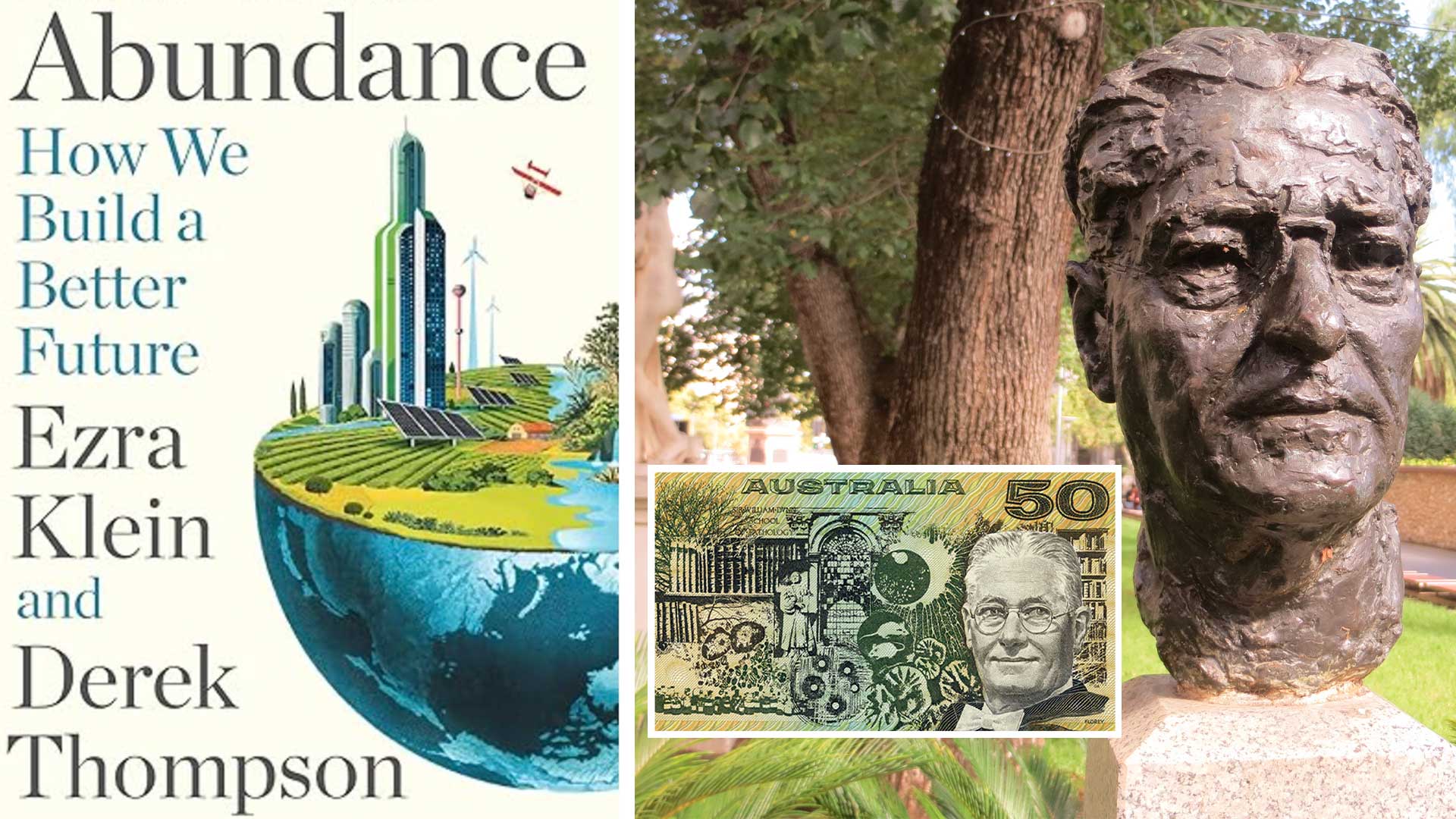
Abundance does destroy the myth that government cannot produce useful technology, especially in picking the right private enterprise partners. The internet, GPS, voice recognition and multi-touch and other technologies all came from government entities.
Adelaide’s 1945 medicine Nobel Prize winner Howard Florey is one of the heroes supporting the argument of Ezra Klein and Derek Thompson in Abundance: How We Build a Better Future, the book that reportedly became a buzzword in federal government circles in Canberra in 2025.
Although Alexander Fleming accidentally discovered penicillin in 1928, it was Florey, with Ernst Chain, who started turning that discovery into a life saver. It was the United States government who had the resources to take up Florey’s vision and bring to it to thousands of people universally – an unpopular word.
The nexus between science, technology and government action becomes a theme of Klein and Thompson’s book looking at the hurdles to creating abundance; at what is stifling areas such as housing, energy, science policy, invention and innovation.
Using mainly the United States for their examples, the authors single out progressive liberal states’ more pro-government stance such as California for blockages in regulation and process over outcomes. They contrast California’s faltering attempt since 2009 to build its one 200-mile high-speed railway with China’s 23,000 miles of high-speed rail achieved in the same time.
The major contrast is China as a command economy under dictatorship with America’s capitalist economy with vested interests and lobbyists also undermining democracy. As has been also pointed out elsewhere, China is a country of engineers, the US is a country of lawyers. (Florey could be classed as an engineer.)
Abundance does destroy the myth that government cannot produce useful technology, especially in picking the right private enterprise partners. The internet, GPS, voice recognition and multi-touch and other technologies all came from government entities involved particularly in the big picture areas such as health and defence. The space programme, especially in going to the Moon, had similar big picture technology spinoffs.
One of science’s great foes, Donald Trump’s biggest triumph was Operation Warp Speed for vaccines to meet the Covid-19 emergency.
In the 1990s, scientists studying the Gila monster, stocky lizard, found it had a hormone that allowed it go months without meals. That hormone would lead to the developing of Ozempic, the drug that could treat diabetes as well as obesity, heart disease, alcoholism and drug addiction – all the effects of abundance that technology can bring without the general awareness among the populace of the reality within our own bodies, let alone the universe.
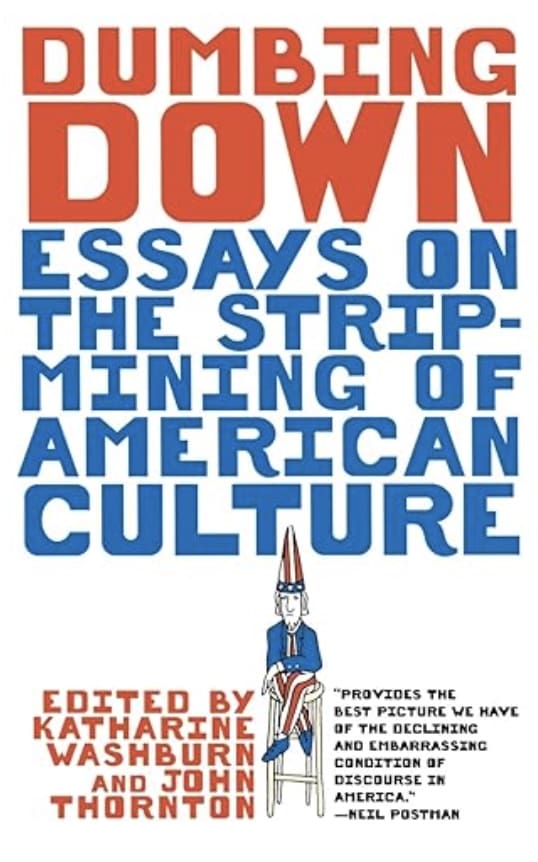
Perhaps a more important book about abundance – the need for thoughtful abundance that comes from education – was presented in the 1996 Dumbing Down: Essays on the strip mining of American culture. In a post-internet world, that strip mining is likely to have intensified.
Klein and Thomson in Abundance do explore the negative effects of decades of slashing immigration, off-shoring manufacture, preventing house building and stalling ambitious infrastructure like high-speed rail that means America has a shortage of workers, houses, innovative products and climate-change solutions. But they do not delve into why the USA, as the world’s richest country, does not fairly share its abundance that could solve so many of its problems.
The country still tolerates the obscenity of 1% of the population controlling as much wealth as the bottom 93%. And that 1% has moved its control into the mass media, let alone electoral influence, to keep it that way.